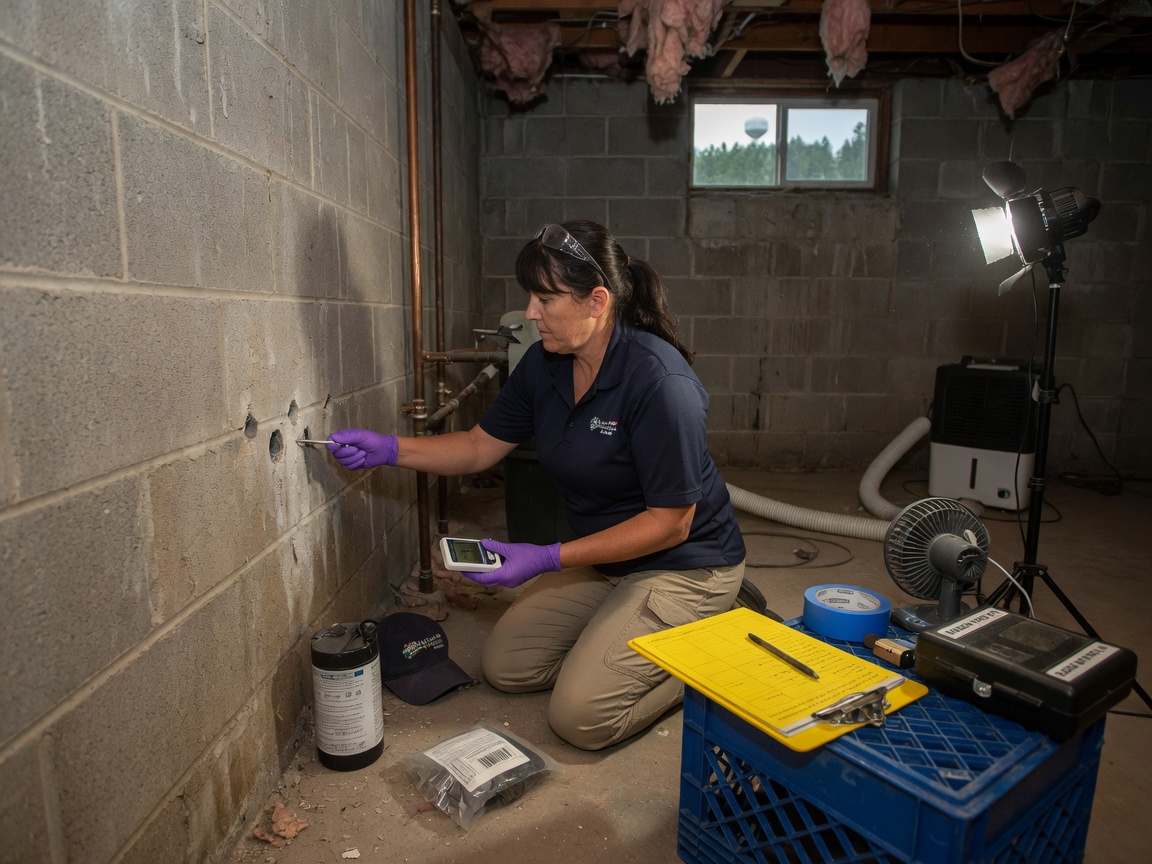
Rapid City sits in Pennington County with a continental climate of cold winters and frequent wind that drives homeowners to seal houses tightly, often raising indoor radon levels. Older stock in North Rapid and Downtown commonly features basements with cracks and poor ventilation that allow soil gas entry, while newer builds in Rapid Valley may still show elevated readings due to local soil conditions. Testing must account for these factors rather than relying on generic national averages.
Short-term tests placed during winter months often read higher because closed windows and wind pressure differentials pull more radon from the ground. Homes near the airport or in Box Elder experience similar patterns from prevailing winds. Proper detector placement away from drafts, sumps and exterior walls is critical, especially in split-level or multi-story properties common across the Westside.
Long-term testing over several months captures seasonal swings from warm summers with open windows to harsh winters. Residents in Summerset and Sturgis often request tests before real estate transactions because buyers now routinely ask for results. Accurate placement and retrieval timing prevent false lows that leave families unaware of exposure risks in Pennington County soil.
Technician insight
In Rapid City, the thing that catches most people out with Radon Testing is placing short-term kits near drafty windows or exterior doors in older Westside homes where constant wind skews results low during shoulder seasons.
North Rapid Split-Level Test
Homeowner in North Rapid requested testing before listing. Devices placed in the lower level showed moderate elevation after a windy week. Follow-up long-term test confirmed the reading stayed above action level once winter sealing began, leading to mitigation planning.
Radon Testing Services We Offer
✓Short Term Radon Testing
Deploy canisters or digital monitors for 2-7 days to capture peak winter readings common in sealed Rapid City homes.
✓Long Term Radon Testing
Install alpha track detectors for 3-12 months to average seasonal variations driven by Pennington County wind and temperature swings.
✓Pre Purchase Radon Testing
Provide same-week results for buyers in Downtown, Westside and Rapid Valley before closing on older or recently remodeled properties.
✓Post Mitigation Verification Testing
Confirm system performance after fan installation with follow-up tests in the same locations used for the original reading.
✓Rental Property Radon Testing
Test multi-unit buildings in North Rapid and South Rapid to meet landlord disclosure needs under local real estate practices.
How it works
- 1
Schedule And Site Review
Discuss property layout in neighborhoods such as Box Elder or Rapid Valley and note foundation type, sump locations and recent remodeling.
- 2
Detector Placement
Position devices on the lowest lived-in level away from windows, doors and high-wind zones typical around Main Street Square and the airport corridor.
- 3
Monitoring Period
Leave devices undisturbed for the chosen duration while accounting for cold-weather sealing or summer ventilation changes.
- 4
Results And Next Steps
Review readings and explain whether mitigation is warranted based on Pennington County soil and housing realities.
Pricing
Cost depends on test length, number of devices and property access needs; quotes provided during Mon–Fri 8am–6pm or Sat 9am–2pm.